
The Framework
The Geese Project Leadership Model
Based on the natural flying behaviors of the Canadian Geese — a metaphor for teamwork, rotational leadership, and collective uplift — the model identifies the cultural forces that shape every Filipino leader and the 12 traits that define AI-ready leadership.
Just as geese fly in formation, rotating the lead position and honking to encourage one another, the Geese Mentality challenges zero-sum, individualistic leadership in favor of shared purpose and collective ascent.
ResilienceEmpathy
IntegrityAdaptability
ResourcefulnessConflict Resolution
Trust BuildingCommunication
CourageVision
CollaborationCultural Awareness
Learn more at www.geeseproject.com
Power Traits
Leadership traits Filipinos are naturally strong at — without conscious learning. These are your cultural superpowers.
Challenge Traits
Traits Filipinos tend to struggle with, shaped by parenting style, education, and societal norms that must be intentionally unlearned.
Aspirational Traits
Traits Filipinos can excel at — you already possess the core element. With focus, these become your greatest differentiators.
Foundational Traits
The bedrock values from which all other traits are built — defining the moral and ethical core of Filipino leadership.
Read the Opening Chapter
Introduction: The Filipino That Wasn’t a Maid
Get a taste of Born to Soar. Read the opening chapter that sparked an entire leadership movement — then order your copy.
The Genesis of a Global Leadership Identity
The humidity hit me the moment I stepped out of Kai Tak Airport. Hong Kong in 1996 was electric — still under British rule, months away from its historic handover back to China. The skyline was a jagged ambition of glass and steel. Double-decker buses roared past neon-lit signs. The harbor ferries cut through Victoria Harbour like clockwork. It was dense. Fast. Unapologetically driven.
I had accepted to be the Senior Auditor for HP Asia Pacific and had been sent to meet my regional team — smart, capable professionals from across multiple countries, all young and early in their careers. We were meeting for the first time as a complete group.
After the formal introductions and the usual small talk, one of my colleagues suggested we grab tea. It was casual, unguarded — the kind of conversation that happens when people lower their defenses just enough to reveal what they really think.
Halfway through our conversation, he leaned back, smiled, and said something that stopped time.
“I’ve never met a Filipino like you before. You’re the first Filipino I will work with who isn’t a maid or a caregiver.”
The words landed softly — but decisively. There was no malice in his voice. No insult intended. It was said with the same tone one might use to remark on the weather. Matter-of-fact. Observational. Almost curious.
I paused. In that instant, my mind raced faster than my response. Should I be offended? Insulted? Angry? Was this something I needed to correct sharply — to draw a boundary, to assert dignity?
Strangely, I felt none of that. Instead, I felt curiosity.
Not because the statement was correct — it wasn’t — but because it revealed something deeper and far more important than personal offense. It revealed perception. Narrative. Identity.
That single sentence did not wound me. It woke me up.
✶ ✶ ✶
The Silence at the Top
By that point in my career, I had already worked across more than 50 countries — leading multinational teams, building markets, negotiating deals, and sitting in rooms where million-dollar decisions were made. I had worked with Americans, Europeans, Indians, Chinese, Koreans, Japanese, Middle Easterners, Latin Americans — leaders of every accent, temperament, and leadership style imaginable.
And yet, as I climbed higher, something became impossible to ignore.
At the entry and low levels, Filipinos were everywhere. Reliable. Hardworking. Trusted. The ones who stayed late, solved problems quietly, held teams together. But as the hierarchy narrowed — middle managers, director level, vice president, C-suite — the presence thinned dramatically.
By the time you reached the top, Filipinos had almost disappeared.
This wasn’t anecdotal anymore. It was a pattern. We were competent enough to be trusted with execution — but rarely with ultimate authority. Strong enough to carry organizations — but seldom asked to steer them. We kept hitting what many call the bamboo ceiling — that invisible barrier that stops Asian professionals from rising further, no matter how capable they are.
But here’s what bothered me most: other Asian cultures were breaking through. Indian CEOs led global tech giants. Chinese executives ran multinational conglomerates. Koreans and Japanese dominated entire industries.
Filipinos? We stalled — consistently — somewhere in the middle. Why?
✶ ✶ ✶
Culture: The Hidden Curriculum of Leadership
Filipino culture is rich, communal, and deeply relational. We are raised to respect authority, avoid open confrontation, maintain harmony, and prioritize group cohesion over individual assertion.
We are taught — explicitly and implicitly — that humility is virtue, silence is respect, and obedience is safety.
These traits make us exceptional team players. They make us trusted deputies, stabilizers, and cultural bridges.
But leadership at the global level — especially in Western-dominated corporate environments — operates under a different unspoken curriculum.
- Visibility is value.
- Confidence is currency.
- Assertion is interpreted as competence.
In that environment, many Filipinos do not fail because they are incapable — but because they are culturally misaligned. Not wrong. Just misread.
And here’s the paradox that struck me hardest:
The very traits that make Filipinos extraordinary contributors are the same traits that can prevent them from being recognized as leaders.
✶ ✶ ✶
Enter the AI Era
Just as these ideas were crystallizing, the world shifted again. Artificial Intelligence began reshaping how decisions are made, how work is distributed, and how leadership is defined. Algorithms now process what humans once decided. Machines execute with speed, scale, and precision.
And suddenly, the question was no longer just who is the smartest in the room.
It became: Who can lead humans in a world run by machines?
Here’s the irony — and the opportunity. The AI era does not reward command-and-control leadership. It punishes it. What machines cannot replicate are empathy, cultural intelligence, ethical judgment, and collective alignment.
These are not Western strengths.
They are Filipino strengths.
Our relational orientation
Our ability to read rooms
Our instinct for harmony without losing momentum
Our resilience born from constraint
Our resourcefulness shaped by scarcity
We are not behind. We are early.
✶ ✶ ✶
From Crab to Geese
But potential alone is not enough. Cultural habits can uplift — or trap. I had seen too many Filipinos pulled back by fear of standing out, by peer pressure to stay small, by what we often call crab mentality — the instinct to pull others down rather than rise together.
Leadership, I realized, needed a different metaphor.
Not crabs clawing at one another on the ground — but geese, flying in formation. Taking turns leading. Creating lift for those behind them. Honking encouragement. Never leaving one another when one falls behind.
That metaphor became the soul of the Geese Project — a leadership philosophy rooted in collective elevation, shared responsibility, and cultural pride.
Looking back, that café conversation was never about offense.
It was about awakening.
It was the moment I stopped asking why the world misunderstood Filipinos — and started asking how we could better understand ourselves.
Not to change who we are. But to claim who we have always been capable of becoming.
I am not the exception.
I am a signal.
The journey that follows is not just mine. It is ours.
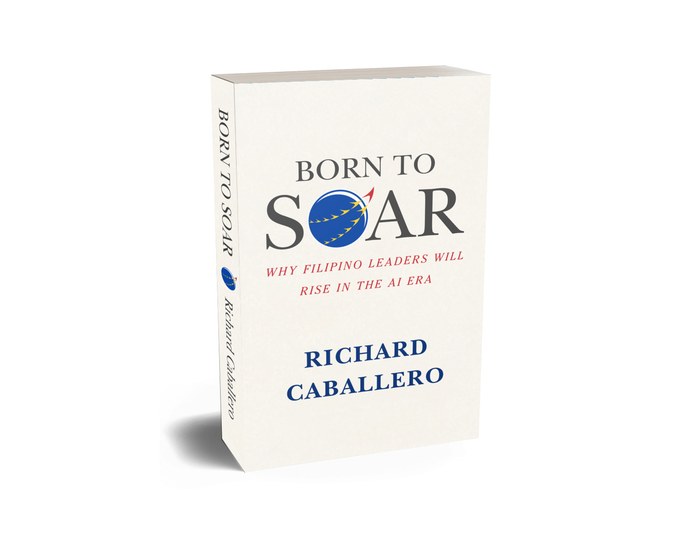
Loved what you read?
Born to Soar goes deeper — through 12 leadership traits, 4 cultural quadrants, and a framework built from 25+ years of global leadership experience.
Order Your Copy
Philippine Orders
What’s Inside the Book
Part 1The Typhoon is Here — The AI disruption and what it means for Filipino leaders
Part 2The 3 Cultural Forces that silently shape your leadership identity
Part 3The Geese Project Leadership Model — Power, Challenge, Aspirational & Foundational Traits
Part 4The 12 Leadership Traits every AI-era leader must master
Part 5Your transformation plan — from Crab Mentality to Geese Mentality
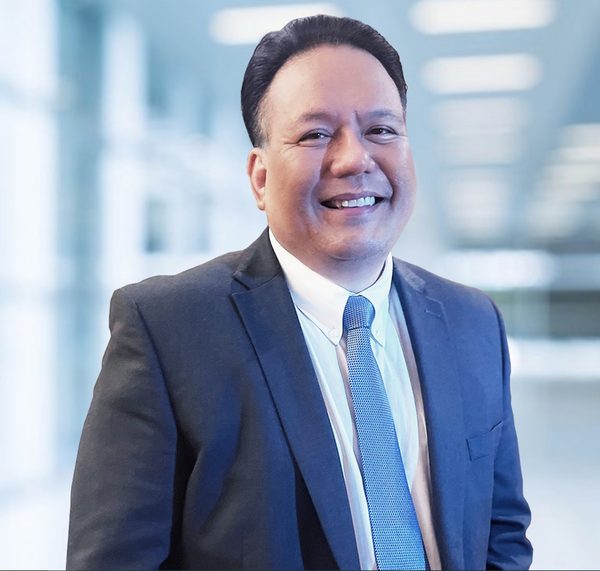
Richard M. Caballero
Founder, The Geese Project
50+Countries
25+Yrs Career
6 Continents
About the Author
Richard M. Caballero
Richard M. Caballero is a Filipino-Canadian executive with an extensive background in leading global technology companies and award-winning multinational teams in over 50 countries and 6 continents. Born in the Philippines, he migrated to Toronto, Canada at 15 years old.
Richard has over 25 years’ experience in international Sales, Marketing, Finance, Product Management and Business Development, working for top global technology companies including Hewlett Packard, Corel, Ingram Micro, Aimetis and Digifort. He is a graduate of HP’s prestigious LEAD Program — reserved for the top 1% of high-potential employees worldwide.
At Ingram Micro, he pioneered their Canadian Managed Services Division and is the recipient of the Global Award of Excellence, the highest award given to its top employee globally.
As Global Vice President of Sales for Aimetis, he led his team to be recognized as one of Deloitte & Touche’s Top 50 fastest-growing companies in Canada and Top 500 in North America, leading a multinational team spanning Brazil, France, UK, India, UAE, Germany, China, Singapore, and USA.
Richard is a leadership consultant and the Global Chief Growth Officer of AltPayNet — a fintech company. He founded the Geese Project to share his leadership experience and knowledge to the next generation of AI-ready Filipino leaders worldwide.
He holds a Bachelor of Commerce from York University and completed his MBA at the Rotman School of Management – University of Toronto, where he received the Dean’s Merit Award and scholarship.
Explore The Geese Project → geeseproject.com
Executive Summary
Why Culture-based Leadership will Define and Dominate the AI Era
There comes a moment in history when a people are called — not by circumstance, but by opportunity.
Born to Soar is a powerful and deeply personal exploration of what it truly means to be Filipino in a world that is rapidly changing. It is not just a leadership book. It is a mirror, a wake-up call, and a declaration of possibility.
For generations, Filipinos have been known for their resilience, hard work, and unwavering ability to care for others. But in the age of artificial intelligence — where knowledge is no longer power and machines can replicate technical skills — the world is beginning to value something far more human.
And that is where the Filipino rises.
This book makes a bold and timely argument: the future of leadership will belong to those who master what AI cannot replicate — trust, empathy, integrity, resilience, and relationships. These are not new traits for Filipinos. They are deeply embedded in our culture, shaped by our upbringing, our communities, and our shared history.
Through the Geese Project Leadership Model, this book reframes the Filipino identity — not as followers of the world, but as leaders ready to shape it. Because just like geese flying in formation, we were never meant to do this alone.
Key Themes
 The AI era rewards human-centered leadership — exactly what Filipino culture produces
 3 Cultural Forces that shape every Filipino leader’s effectiveness
 4 Leadership Quadrants: Power, Challenge, Aspirational, and Foundational
 12 Essential Leadership Traits that define AI-ready leaders
 The Geese Mentality as the antidote to the Crab Mentality
 From supporting the world to leading it — a once-in-a-generation call
Advance Praise
What Readers Are Saying
This book is a mirror every Filipino professional needs to look into. Richard doesn’t just inspire — he challenges you to confront the cultural conditioning that has been quietly holding you back.
Maria Santos
VP of Operations, Fortune 500 Technology Company
In 30 years of working with global teams, I have never seen our Filipino cultural strengths articulated with this level of precision and power. A must-read for every leader in the AI era.
James Reyes
Global Director, Multinational Healthcare Organization
Born to Soar gave me permission to lead as a Filipino — not despite my culture, but because of it. Richard’s framework is practical, profound, and long overdue.
Dr. Ana Delgado
Executive Coach & Leadership Educator
Get Your Copy
Order Born to Soar Today
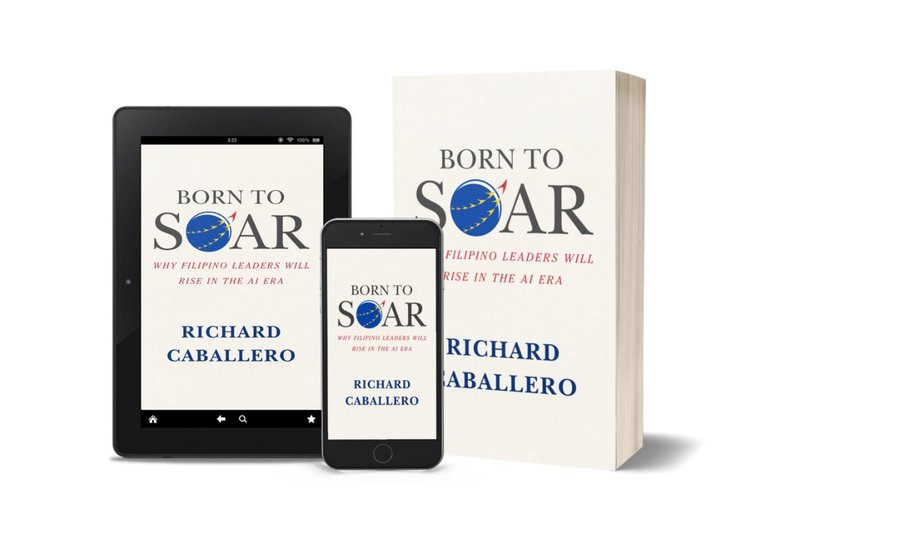
Choose your ordering option below — direct Amazon delivery for international readers, or complete our simple form for orders within the Philippines.
 International
Order via Amazon
Available worldwide in hardcover, paperback, Kindle eBook, and audiobook. Delivered to your door anywhere in the world.
 Hardcover
 Paperback
 Kindle
 Audiobook
Ships internationally • Secure checkout • All major cards accepted
 Philippines
Order for Philippines Delivery
Order your signed copy directly for delivery within the Philippines. Fill in the form and our team will confirm your order within 24 hours.First Name *Last Name *Email Address *Mobile Number *Format *Select formatHardcoverPaperbackSigned Copy (+₱200)Quantity *1 copy2 copies3 copies5 copies10+ copies (bulk)Delivery Address *Special Instructions (optional)
✓ Submit My Order
 Questions? Call us: +63 969 300 9240

Bulk & Corporate Orders
Ordering for your team, organization, or leadership program? We offer special pricing for 10+ copies, customized dedications, and volume discounts. Perfect for HR departments, universities, leadership programs, and corporate gifting.
___
The Philippine IT-BPM Industry
~2M
Filipinos powering global business services worldwide
$40B+
Annual revenue contribution to the global economy
 At the center of AI-driven transformation in global business services
About IBPAP
The IT and Business Process Association of the Philippines is the enabling organization for the country’s IT-BPM industry, with nearly 2 million Filipinos and US$40B in annual revenues.